
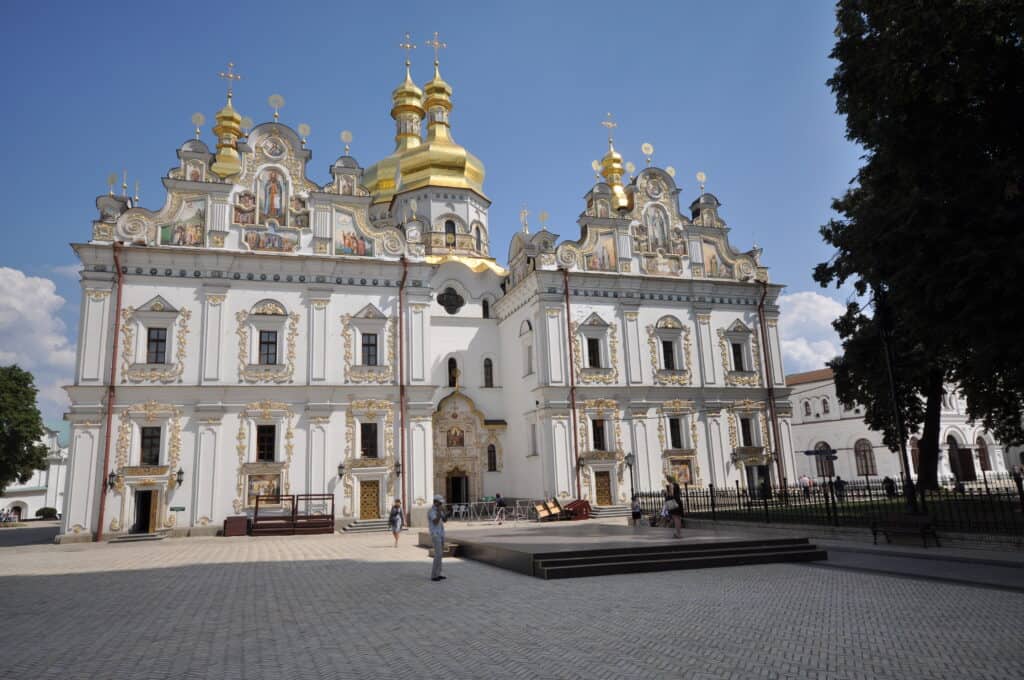
This week the media has been reporting on the dramatic stand-off at one of Ukraine’s most famous monasteries in Kyiv. The monks are refusing to leave, despite the orders of the Ukrainian authorities, who claim they are sympathetic to the Russians.
I first visited the historic Pechersk Lavra monastery in Kyiv (also known as the ‘Monastery of the Caves’ because it is built over catacombs) in 1985 when it was still under Soviet rule.
In 1928 the monastery had been turned into an anti-religious museum park. In the decades that followed the population of Kyiv was subjected to state-sponsored atheism, reinforced by school curriculums and draconian persecution. It was only after the collapse of the Soviet Union that Pechersk Lavra was turned back into a monastery and is now home to over 100 monks.
Throughout history, despots have attempted to supress religious freedom, beliefs and practices, usually without success.
At the first Easter, Pontius Pilate gave orders that the tomb of Jesus should be sealed and guarded by soldiers, in case someone wanted to steal his body. He thought he could intimidate the first disciples and frighten them into submission.
Three days later the tomb was empty. The risen Christ appeared to his followers with a powerful message that death had been defeated and fear had been banished. The first Christians scattered to every corner of the globe, propelled by the Easter message of self-giving love and costly service, a message which still reverberates around the world today.
Image credit: Jorge Láscar from Australia, CC BY 2.0, via Wikimedia Commons
.jpg)