
Churches are places of worship, community, hospitality and heritage. As buildings that welcome members of the public, they also have legal responsibilities to ensure that people can use them safely and that the risks from fire are properly managed.
Every church should have a suitable Fire Risk Assessment and a Fire Safety Plan that reflect how the building is used, the activities that take place within it, and the needs of those who use it.
Regular review, staff and volunteer training, and appropriate fire detection and safety equipment all play an important part in protecting people, buildings and the church’s mission.
This page brings together guidance, resources and practical advice to help PCCs, churchwardens and parish volunteers meet their responsibilities, understand the permissions that may be required for fire safety works, and access further support from the Diocese and partner organisations.
If you are planning fire safety improvements or are unsure whether permissions are required, please contact the DAC team for advice.
Fire Risk Assessment
As buildings used by the public, all churches need to have a Fire Risk Assessment.
- Resources for this – including the legal requirements, the scope of the Fire Risk Assessment and a template can be found on the Ecclesiastical Insurance website.
- The Fire Risk Assessment should cover people and activities, as well as the nature and complexity of the building.
- Make friends with your local Fire and Rescue Service. Invite a team to visit and walk around the building with you to identify any potential problems:
- Bedfordshire Fire and Rescue Service – contact@bedsfire.gov.uk
- Hertfordshire Fire and Rescue Service – administration.cfs@hertfordshire.gov.uk
- London Fire Service (for Barnet churches) – London Fire brigade | Barnet Council
- The Fire Risk Assessment should be undertaken by a Responsible Person appointed by the PCC. Depending on the level and type of use of the church premises, this may be a member of the congregation, or, for churches with complex use, for example as a night shelter, the PCC may appoint an accredited fire risk assessor.
- The PCC must agree the Fire Risk Assessment and regularly review it, to ensure identified risks have been addressed as far as possible and that it is updated for changing uses and circumstances.
Fire Safety Plan
Each church also needs to have a Fire Safety Plan covering the safety of people in the event of a fire occurring.
- There are resources on the Ecclesiastical website
- Note that for concerts, fairs, large services and other events the PCC will also need to have a plan to ensure people’s safety if an incident other than a fire occurs. Information and advice on Martyn’s Law:
- Training and awareness:
- Ensure churchwardens, sidespeople/stewards are aware and trained
- Notify building hirers of requirements to be met and publicised (e.g. doors unlocked as emergency exits; maximum capacity…]
- Regularly test evacuations procedures
- Keep reviewing for new events or risks
Fire Detection
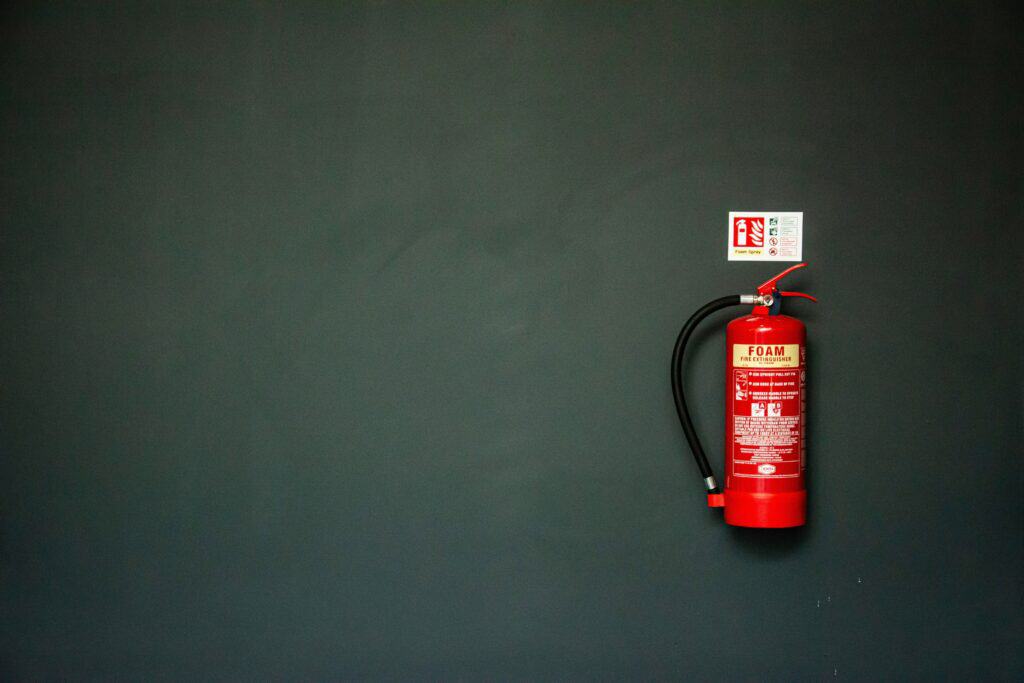
- Detailed information on requirements and types of extinguishers can be found on the Ecclesiastical Insurance website.
- Signage – buildings generally used by those familiar with them; temporary signs for events; fixed signs for regular outside use
- Emergency lighting – from torches to fixed lighting e.g. in tower staircase
- Alarm system – consider in subdivided spaces e.g. hall with offices
- Permissions:
- Fire extinguishers – deemed List A
- Installation of lighting and safety equipment in areas not generally visible to the public or unseen from ground level – deemed List B
- Installation of security and fire alarms – deemed List B
- All other works may require a Faculty. Please contact the DAC team to determine permissions or ask for advice.
Frequently asked questions
Who should do our Fire Risk Assessment?
The Fire Risk Assessment should be undertaken by a Responsible Person appointed by the PCC. Depending on the level and type of use of the church premises, this may be a member of the congregation, or, for churches with complex use, for example as a night shelter, the PCC may appoint an accredited fire risk assessor.
How often do we need to review our Fire Risk Assessment?
This should be done annually, or when there is a change in personnel, event type, or to the fabric of the building.
How often do fire extinguishers need to be tested?
All firefighting equipment should be inspected and maintained professionally at least annually by an FIA, BAFE or IFEDA registered firm (taken from Ecclesiastical Insurance Guidance Leaflet 7.0 Fire extinguishers).
Where can we get more help?
The DAC team hold training events to help you be prepared and to stay calm in the event of an emergency situation. Keep an eye on our events page for upcoming training, or you can contact Ann Wise.
Important Contacts and Links
Ann Wise – Historic Buildings Church Support Officer – ann.wise@stalbansdiocese.org
DAC Team email address – dac@stalbansdiocese.org
Ecclesiastical Insurance – Fire safety