

I was once visiting a church and noticed something very interesting about the layout of the building. The front door had a ramp, there was level access throughout, and there was even a lift to both the upper level and the crypt. However, when I looked at the stage at the front of the church, it could only be accessed by two sets of steep stairs.
It struck me there and then that this church had considered that disabled people would attend church, but had never considered that they might be involved in serving it. A wheelchair user, for example, wouldn’t have been able to preach, serve on the worship band, do the readings or give the notices.
This church has stayed with me as a physical example of the importance of this year’s Disability Awareness Sunday theme: One Body, Many Parts.
One Body, Many Parts
In 1 Corinthians 12, St Paul tells the Church, “Now you are the body of Christ.” He explains that a body is made up of many different parts, all of which are important, and that the same is true of the Church. In verses 22 and 23, he writes that “those parts of the body that seem to be weaker are indispensable, and the parts that we think are less honourable we treat with special honour.”
So, what does this look like for Disability Awareness Sunday?
It means that, as a church, we need to consider whether we are enabling and encouraging the gifts of every person, regardless of disability. Coming back to my example from earlier, it means that the pulpit should be as accessible as the pews.
Beyond accessibility
Genuine inclusion means moving beyond accessibility and recognising disabled people as people who fully belong in the Church. It means understanding that disabled people have gifts to bring that the Church needs.
If we take Paul’s message seriously, it is simply not enough to facilitate disabled people’s presence in church. We must also notice their absence and ask where barriers might be preventing them from participating fully. Are disabled people able to serve, lead, preach, worship and contribute their gifts? Are their voices being heard when decisions are made about the life of the Church?
Genuine inclusion looks like listening to the voices and experiences of disabled people and being willing to learn from them, not only as people with lived experience of disability, but as leaders, ministers and members of the body of Christ. It means recognising disabled people for who God has made them to be: an “indispensable” part of the body of Christ.
A practical first step
So, what is one thing churches can do this year to begin treating disabled people with this “special honour”?
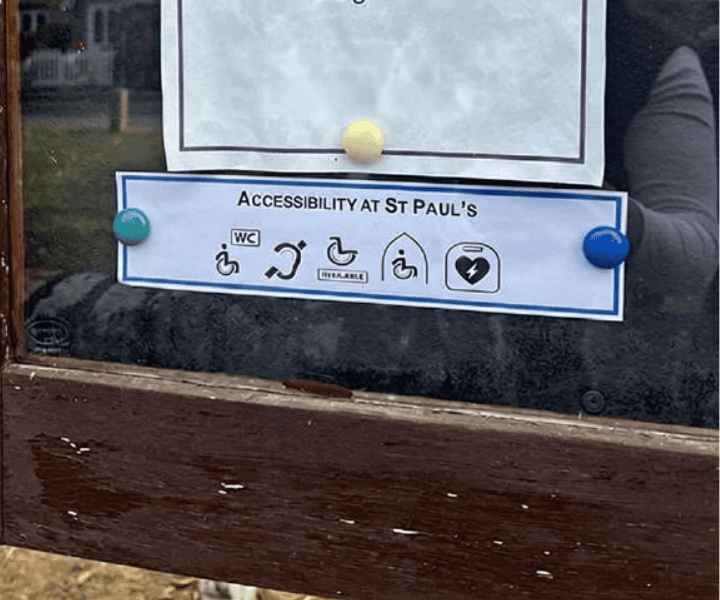
The Church of England Accessibility Icons are a collection of symbols representing different accessibility features within churches. Take a look at them and consider which ones apply to your church, and where there might be opportunities to make changes.
To go a step further, why not display the symbols that apply to your church on your website, noticeboards or welcome sheets? This can help communicate to disabled people, before they even arrive, what they can expect when they visit your church.
But perhaps, as you look at those icons, ask yourself one more question: what isn’t there yet?
Every part matters
Accessibility is not simply about enabling people to get through the door. It is about enabling people to participate in the life of the Church and to know that they truly belong.
For more information about making your church more accessible for disabled people, please do not hesitate to get in touch with me.
This Disability Awareness Sunday, may we remember that we are one body, made up of many parts, and every part matters.