
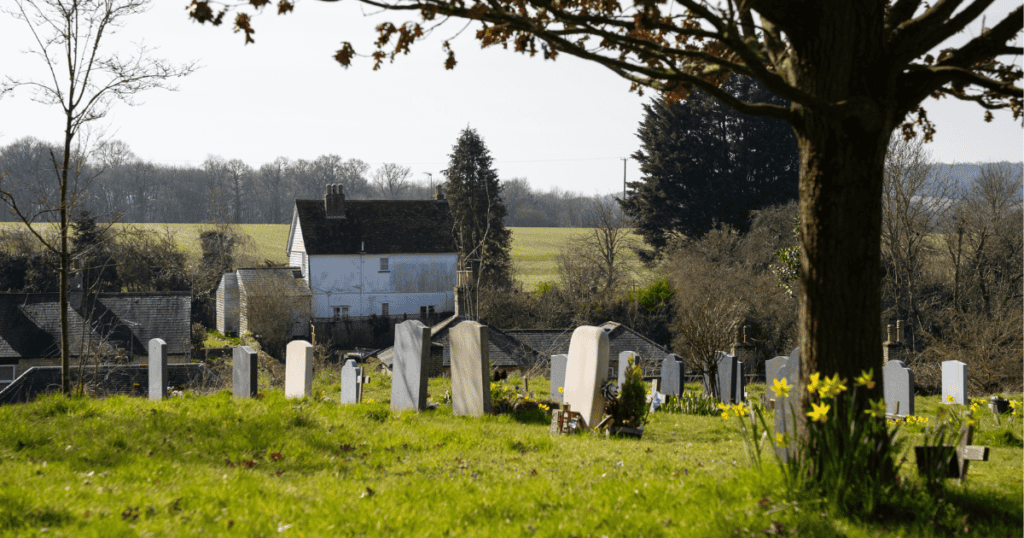
Rachel Johnston serves as the Diocesan Environment Officer and is our key point of contact for anything related to how environmental issues affect our churches, churchyards, and wider communities. Working closely with the DAC, she helps to highlight and address important topics such as biodiversity and sustainable care of our buildings and land.
If you’d like to get in touch with Rachel, you can reach her at environment@stalbans.anglican.org.
She recently shared a message offering encouragement and support to all those involved in caring for their church and the surrounding environment:
“Dear Friends; The snowdrops that announce the arrival of spring are now at their best in our churchyards and church gardens. With signs of the changing season all around, there’s plenty of encouragement to start planning activities and events for the year ahead, and to celebrate the biodiversity of the green spaces surrounding our churches. Whether you have an ancient churchyard providing a habitat for a rich variety of species, flower beds surrounding a car park, or no land at all and your church is looking for opportunities to be involved in a community garden or other local project, your church community has a vital role to play in recording and protecting our threatened natural heritage. “
There are a number of events for your church to get involved with:
Churches Count on Nature Week: 6 – 14 June, 2026
We hope even more churches in our diocese will take part this annual citizen science event this year. Registration opens on 16th March and from that date a link can be found here. There are resources to help churches organise activities to record species, suitable for all ages. This year there will be training webinars to help in using the i-naturalist app to submit sightings for expert verification before being added to national biodiversity databases. The event is organised jointly by the Church of England, A Rocha UK, and Caring for God’s Acre, the burial ground conservation charity which advises the Church of England on all aspects of the management and protection of these unique and special places.
Burial Grounds Biodiversity Report 2025
Since 2024, Caring for God’s Acre have produced an annual churchyard Biodiversity Report, aiming to cover the recording of species, mapping of burial grounds and to include contributions and feedback from those recording species in churchyards using the iNaturalist app. The 2025 report is now available to read on the CfGA website: Burial Ground Biological Recording Results – Caring For God’s Acre – the conservation charity for burial grounds across the UK
Those churches which took part in Love your Burial Ground Week/ Churches Count on Nature in 2025 will find their data included alongside charities such as the British Trust for Ornithology and a range of Environmental Records Centres. Last summer, large numbers of birds, lichen species, and invertebrates were recorded, including plants and animals on the Red List. Some of these areaxiophytes, or indicator plants that thrive only in highquality, unspoiled habitats such as ancient woodlands, old meadows, or undisturbed wetlands. Overall, the report demonstrates the value of churchyards for the protection of species, and the recording work carried out by volunteers.
Opportunity to participate in BTO (British Trust for Ornithology) research
A special opportunity for churches keen to take part in citizen science. The BTO will be launching Birds in Greenspaces, a new UK-wide citizen science survey of birds that use our green spaces in April 2026. They’re asking local groups and individuals to take part, to better understand how people and birds interact with green spaces. Groups and organisations can register their interest now.