

Water is the greatest cause of damage to buildings. Rainwater goods (including gutters and downpipes) together with a watertight roof ensure that rainwater is directed safely away from your church building. It is therefore vital that these elements are well maintained and regularly checked.
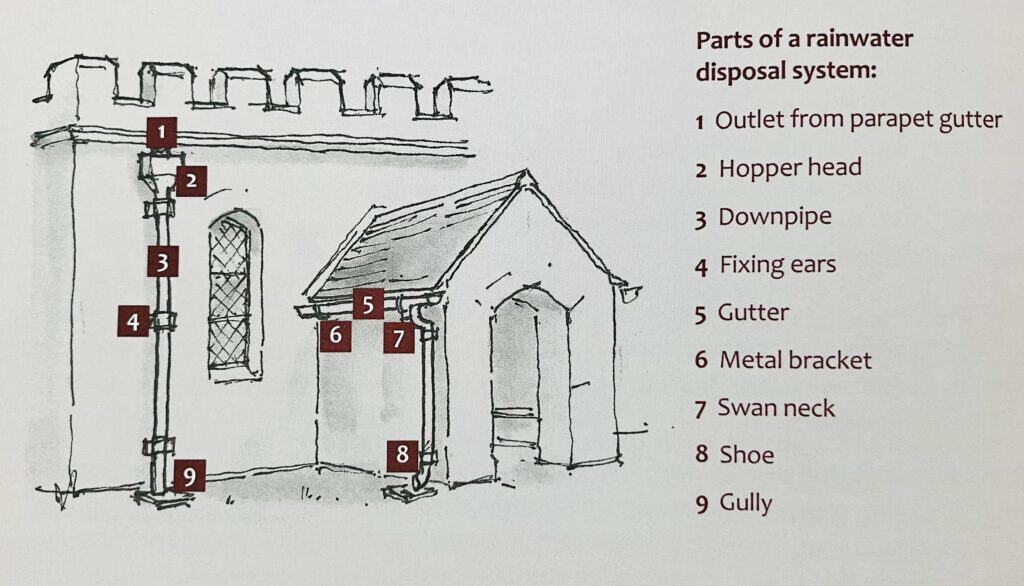
Many cases of damp inside a church building can be traced back to something simple outside, such as blocked or inadequate gutters. A blocked gutter or hopper will overflow, and the water may run down the walls, saturating the masonry and seeping through to the interior. Excess water can soak into the ground and cause the base of the walls to become damp. High level water ingress can also occur from blocked and deficient rainwater goods, particularly if your roof system has valley gutters and/or parapet gutters that are difficult to see from ground level.
All these problems are costly to repair and can lead to a loss of original fabric. Regular maintenance will ensure that you detect any damage or blockages in the rainwater disposal system before they can do any damage to your building. Historic England’s Value in Maintenance Report in 2019 found that regular maintenance and small ‘stitch-in-time’ repairs can reduce a church’s cost liability by 15-20% compared to if these works are ignored until the damage is significant.
Maintenance
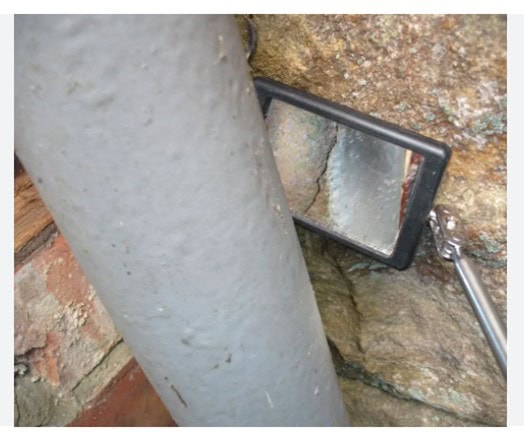
A visual inspection from the ground will provide a good overview of the condition of your gutters and rainwater goods and will enable the identification of any areas of potential concern. This might include blockages, leaks from downpipes or overflow from gutters, hoppers or outlets. Ideally, this should be done during or just after heavy rain as you will be able to spot any problems areas easily. A pair of binoculars will help you to see what is happening at gutter level and a hand mirror can be placed behind a downpipe to look for cracks.


At least twice a year, the gutters, valleys, rainwater heads, dry areas, channels, downpipes and gullies need to be cleared out. This is a crucial part of the overall building maintenance. If you have trees overhanging or close to your building and gutters, you may need to clear them more regularly especially in the autumn. If your gutters are difficult to access, you could consider a routine maintenance contractor to clean the rainwater goods twice a year. Always make sure volunteers only do what is safe and within their capabilities.
All drains and soakaways also need to be checked. Lift any manhole covers, and flush drains to ensure they are running freely and without any blockage or build-up of silt. If the below ground drainage appears blocked, specialist contractors should be used to rod the system.
Whilst checking gutters and rainwater goods is not the most glamorous job in church life, it is critical to the longevity of the fabric and keeping your building dry.
What next?
Tomorrow we will be looking at walls.
Don’t forget we are running events across the Diocese all week on Maintenance and it would be great if you could join us. Sign up below.
Checkout issues? Book here.Recent Events
New minor repairs and improvements grant application process – May 2024
This training began with a short presentation from Liz West on applying for the new minor repairs and improvements grant application. You can find that presentation and other resources online.
Church Maintenance workshop – May 2024
This workshop was led by Liz West and you can find the the resources that were shared at the workshop online. They are designed to help parishes identify routine maintenance issues and understand what to do next.
News from the DAC team
The DAC is here to support you to care for and develop your church buildings and churchyards, and to help you through the permissions processes