

All churches need a good ‘hat’ to keep water out and prevent the deterioration of the building and its contents. It also ensures that the congregation stay dry whilst worshipping! It is therefore vital that your church roof is carefully maintained so that it retains its weatherproof properties.
As part of your regular maintenance, all roofs need to be checked to ensure that they are in good order, ideally twice a year.
Roofs can be very complex, with valleys and parapets hiding parts of the roof when viewed from the ground. They are often inaccessible, due to height or a tight urban site, and this poses the greatest problem, as defect and damage are not easily detected.
A faulty roof will quickly lead to damage in other building elements. If damp patches and stains appear inside it is usually an indicator that water is getting into the building from above. Water can travel a considerable distance from the point of ingress before it trickles down and is seen, so the roof failure might not be immediately above the staining or damp patch. If roof damage is identified early, or caught as part of your regular maintenance, then only a few localised repairs may be necessary.
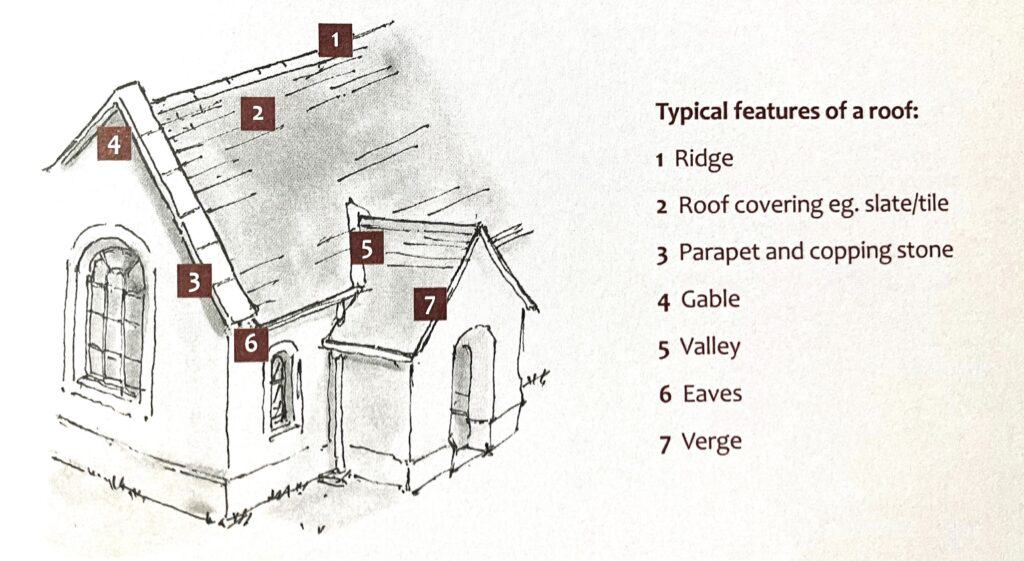
Maintenance
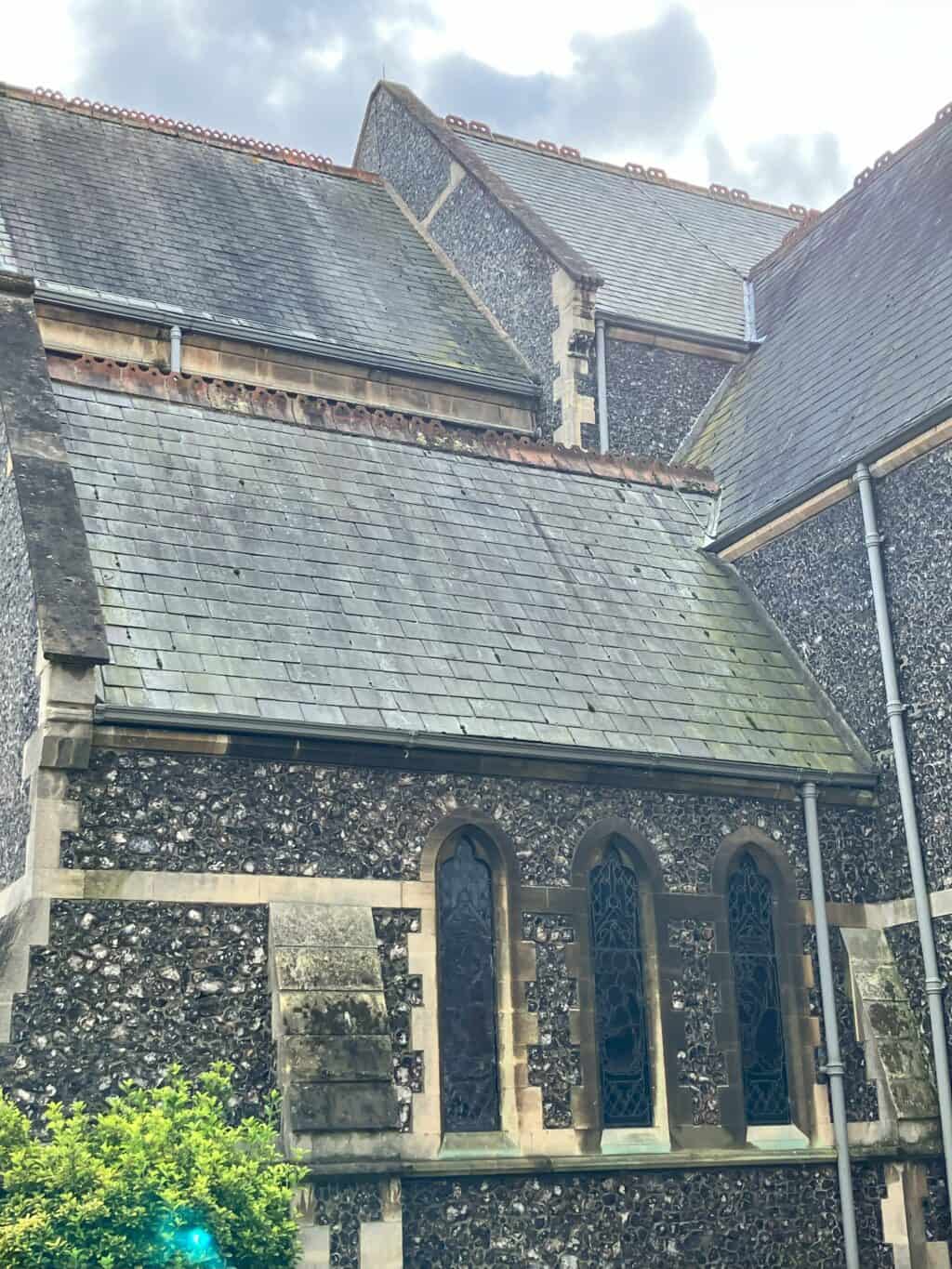
Look for loose, slipped or cracked tiles or slates. These should be refixed or replaced as soon as possible. Splits or cracks in sheet metal roofs need patch repairs or replacements: they should be welded, not soldered, by a qualified contractor and with all necessary fire precautions.
Moss harbours moisture and damp which can cause slates and tiles to deteriorate. It should be carefully removed by a knowledgeable contractor.
Stitch-in-time or localised repairs might be necessary to certain vulnerable areas such as missing ridge and hip tiles which cover the join of meeting slopes, or lead flashings where the roof meets the wall.
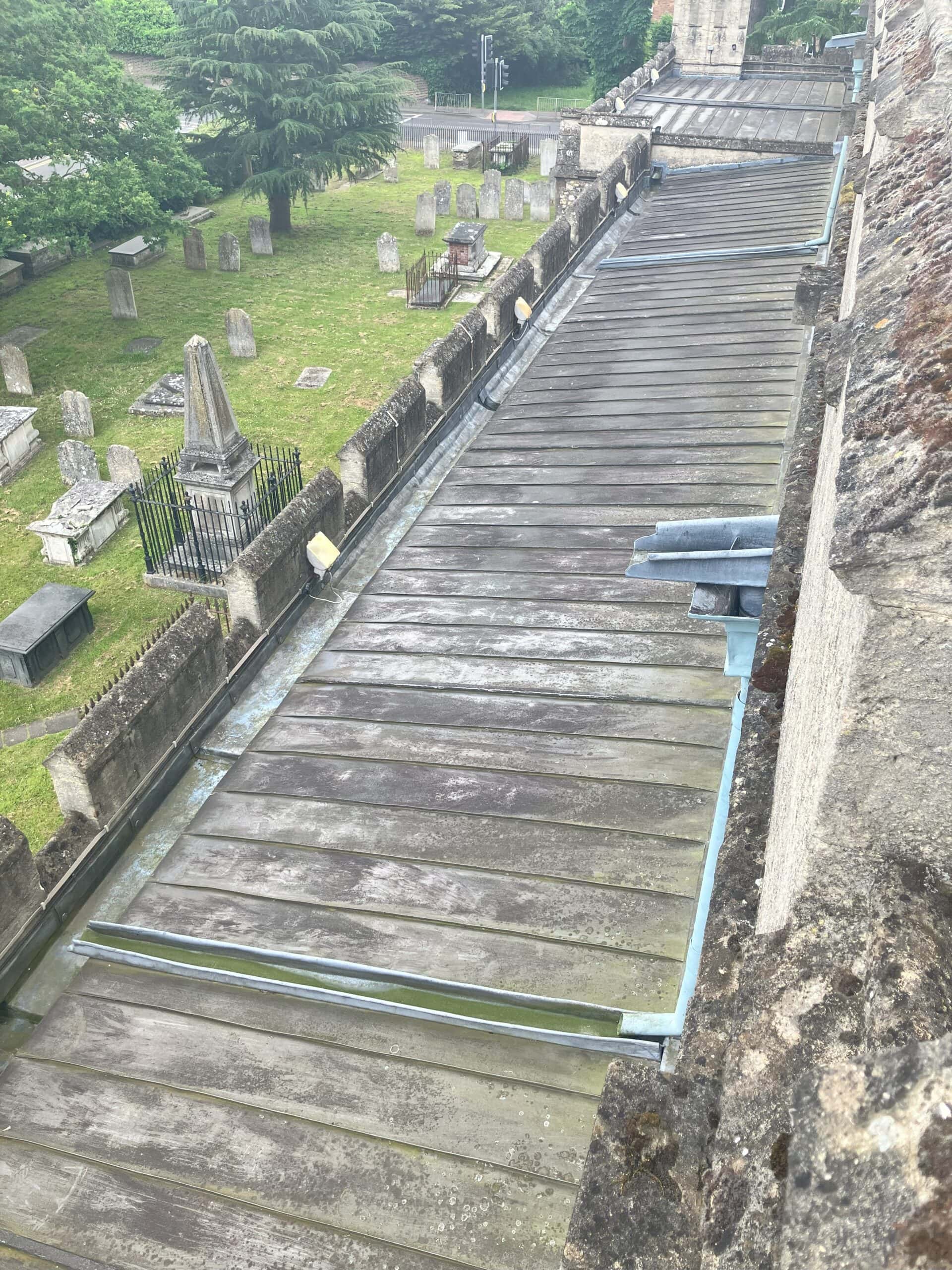
Roof valleys and parapet gutters as mentioned above are generally out of sight, and can be a particular vulnerability. It is not unusual for tennis balls, footballs, birds’ nests and even dead birds to cause a blockage. These gutters therefore need to be inspected and cleared regularly as part of your roof maintenance.
Health and safety
Roofs can be highly dangerous and no inspection should be carried out without appropriate risk assessment and safety devices.
Roofs are not designed to be walked on. Slates and tiles are brittle and can be easily damaged; metal coverings can also be punctured and split.
We recommend that you ask your inspecting architect or surveyor for advice on accessing your roof for regular inspection.
What next?
Tomorrow we will be looking at Rainwater Goods and Drains.
Don’t forget we are running events across the Diocese all week on Maintenance and it would be great if you could join us. Sign up below.
Checkout issues? Book here.Recent Events
New minor repairs and improvements grant application process – May 2024
This training began with a short presentation from Liz West on applying for the new minor repairs and improvements grant application. You can find that presentation and other resources online.
Church Maintenance workshop – May 2024
This workshop was led by Liz West and you can find the the resources that were shared at the workshop online. They are designed to help parishes identify routine maintenance issues and understand what to do next.
News from the DAC team
The DAC is here to support you to care for and develop your church buildings and churchyards, and to help you through the permissions processes