


Masonry
Solid and stable, sometimes ancient: it is easy to take the walls of your church for granted. Yet, walls are often a key part of the heritage of your building, showing off local building materials (flint, Totternhoe stone, Lower Greensand, etc) and techniques, and telling the story of the building, rebuilding and improving as your community’s needs changed.
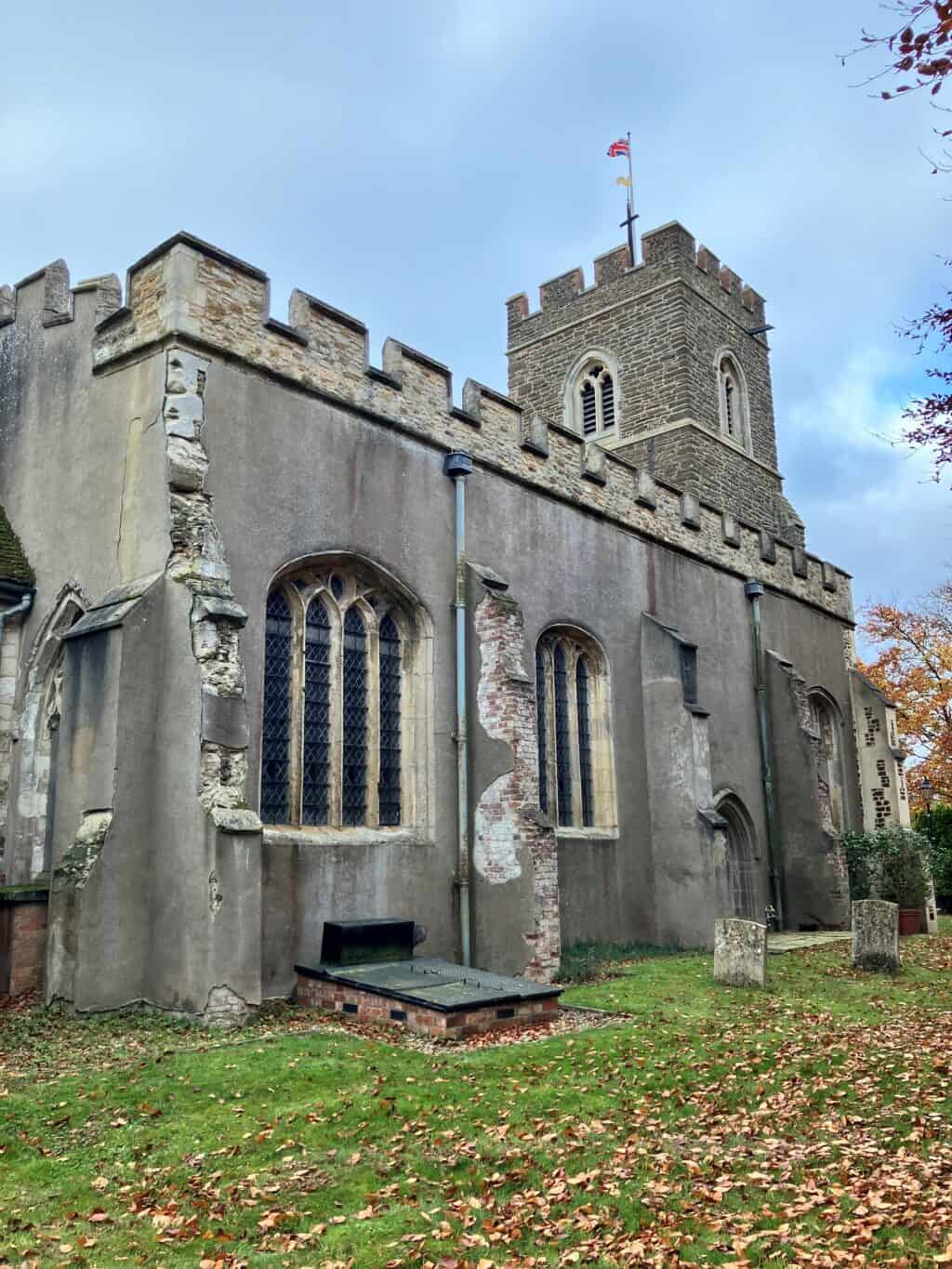
The masonry elements of your building e.g. the flint, brick, chalk, sandstone or limestone will generally stand up to the elements and have a slow rate of decay. However, problems with other parts of the building, such as the rainwater goods, may increase their decay, and the use of incorrect materials, such as cement mortars and render, can also have a damaging effect.
When carrying out your regular maintenance inspections look out for:
- signs of damage to architectural details such as string course, hood moulds and cornices (as well as looking nice, these details are designed to throw water clear of the face of the wall);
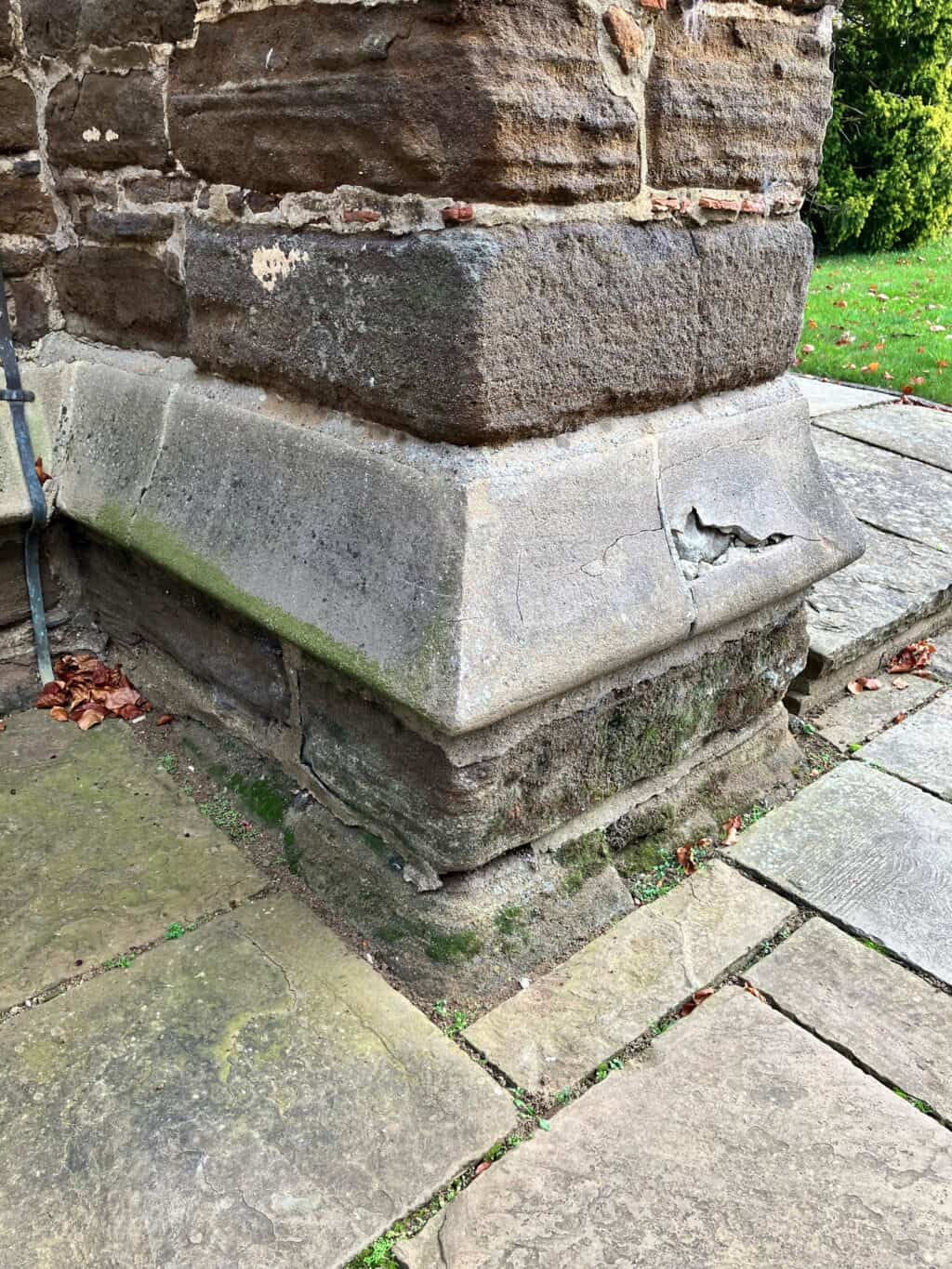
- areas of masonry that are deeply eroded;
- areas of pointing that are deeply recessed, crumbling, loose or missing;
- eroded lime render exposing the stone underneath; and
- any cracks in cement render that could allow water to penetrate the masonry.
Structural Issues
The first signs of structural issues in walls are often spotted by volunteers, as they are familiar with their church building and its intricacies. It is important to record any cracks in your logbook so that they can be monitored and inspected by your professional adviser at your next quinquennial. Some movement is merely seasonal, and cracks that open and close over the year may be harmless. Keeping a record of any cracks that you identify will assist in determining the cause.
The usual suspects are often the source of structural distress: water ingress from rainwater goods or damaged roof systems. This is why maintaining your gutters and rainwater goods is so important. The presence of large trees close to your church building can also cause structural issues, as they suck the moisture out of the soil.
When carrying out your regular maintenance inspections look for:
- any unusual or progressive cracks, bumps or bulges; and
- any spalling of the edges and corners of blocks of masonry.
If you identify and signs of movement or unusual changes, record them in your logbook. If concerned, contact your professional adviser.
Recent Events
New minor repairs and improvements grant application process – May 2024
This training began with a short presentation from Liz West on applying for the new minor repairs and improvements grant application. You can find that presentation and other resources online.
Church Maintenance workshop – May 2024
This workshop was led by Liz West and you can find the the resources that were shared at the workshop online. They are designed to help parishes identify routine maintenance issues and understand what to do next.
News from the DAC team
The DAC is here to support you to care for and develop your church buildings and churchyards, and to help you through the permissions processes