


Churches are amazing buildings, not just as places of worship or the heart of a community but full of wonderful bits of architecture, sculpture, woodwork and stained glass and much more!
How often though have you noticed the kneelers that peek out from under pews or spread seemingly randomly across the wooden seats?
As churches continue to replace pews with chairs this blog celebrates the humble kneeler and encourages churches within the Diocese of St Albans to record them for future generations to enjoy and marvel at!
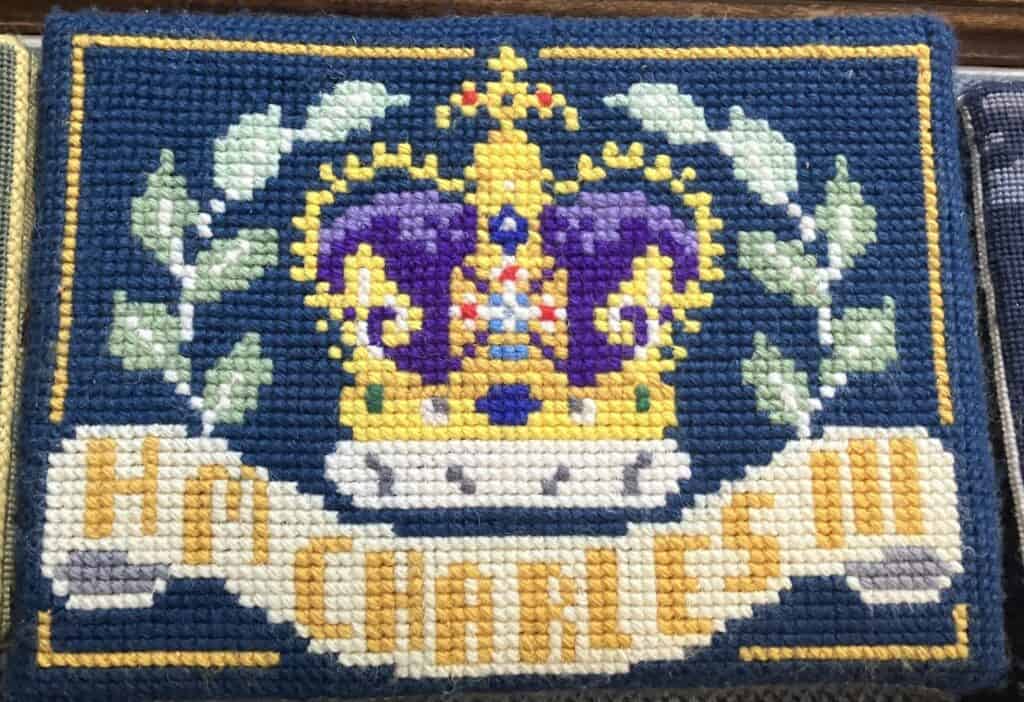
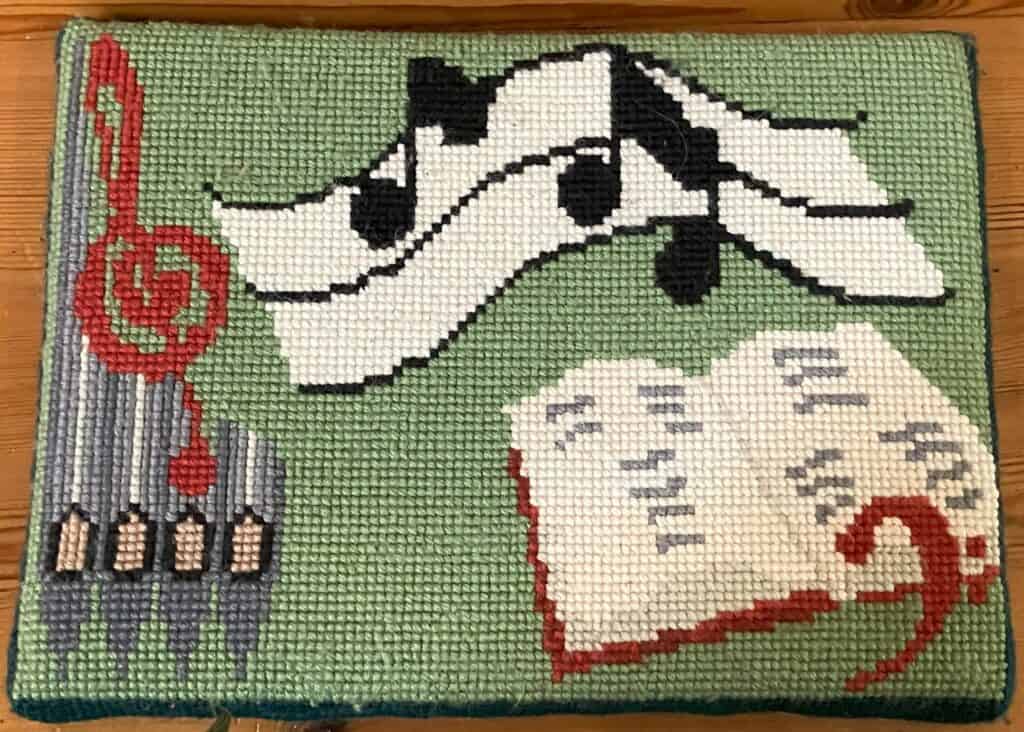
When embroidered Kneelers (or Hassocks) first emerged is unclear. I have read that it was the 16th century and elsewhere the 17th century. We do know however that Hassocks were first defined in 1516 as cushions to rest feet on or ‘especially in church to kneel on’. The word Kneeler first appears in 1848.
The general consensus is that worshippers probably provided their own up until the end of the 19th century.
According to an article published in the Church Times (7th March 1997) and often referred to:
“.. In the early church people stood to pray. In the orthodox church they still do. Nonconformists sit. Anglicans and Roman Catholics usually kneel, a posture adopted by Jesus in the Garden of Gethsemane according to St. Luke. Kneeling for prayer gradually spread during the 12th century. In the Book of Common Prayer people are asked to make our confession ’meekly kneeling upon your knees.’ Bishops and princes may have knelt on velvet cushions but ordinary people had kneelers developed from tussocks (like Miss Muffit tuffet) and were stuffed with grass or straw..”
Church Times (7th March 1997)
The article goes on to say that the kneeler that we are familiar with today dates from the 1930s and first used by Winchester cathedral’s worshippers, with Salisbury Cathedral following in 1937.


Regardless of terminology or origins one thing we can all agree on is that these humble colourful kneelers brighten up a church! Many are made up from kits supplied by companies such as Jacksons of Hebden Bridge (Church Kneelers from Jacksons of Hebden Bridge – Jacksons Church Kneelers) but others are clearly original designs inspired by the history and location of an individual church.
The embroidery technique used to create the designs on a cotton canvas is known as Canvas Work, Cross-stitch or Needlepoint. I’ve never had the patience to have a go but I admire the skill of the embroiderers who make such beautiful yet practical works of art. I love turning kneelers over and seeing if on the underneath the name of the maker has been recorded and the date it was completed. Artists always sign their paintings so why not the maker of the kneeler?


I’m not alone in my love and appreciation of the humble kneeler! In May 2023 the Church Times featured an interview with Elizabeth Bingham, who had recently had her book Kneelers: The unsung folk art of England and Wales published. It’s a very interesting article as it explains Elizabeth’s fascination with kneelers but also gives more information about how kneelers became very popular embroidery projects throughout the 20th century Kneelers: Where prayer has been valid (churchtimes.co.uk).
Her admiration for kneelers led Elizabeth to create the website https://parishkneelers.co.uk celebrating the kneeler as being ‘Textile Art – Folk Art – Community Art’. Here you will find out more about the history of kneelers in the 20th century, how to make your own and lots of design ideas. For me, the most exciting and significant part of the website is the Gallery which is divided into counties including Hertfordshire and Bedfordshire. This is where you can find photographs of kneelers that can be found within the Diocese of St Albans.
Currently the following churches have shared images of their kneelers on the website for others to enjoy:
Bedfordshire –
Hertfordshire –
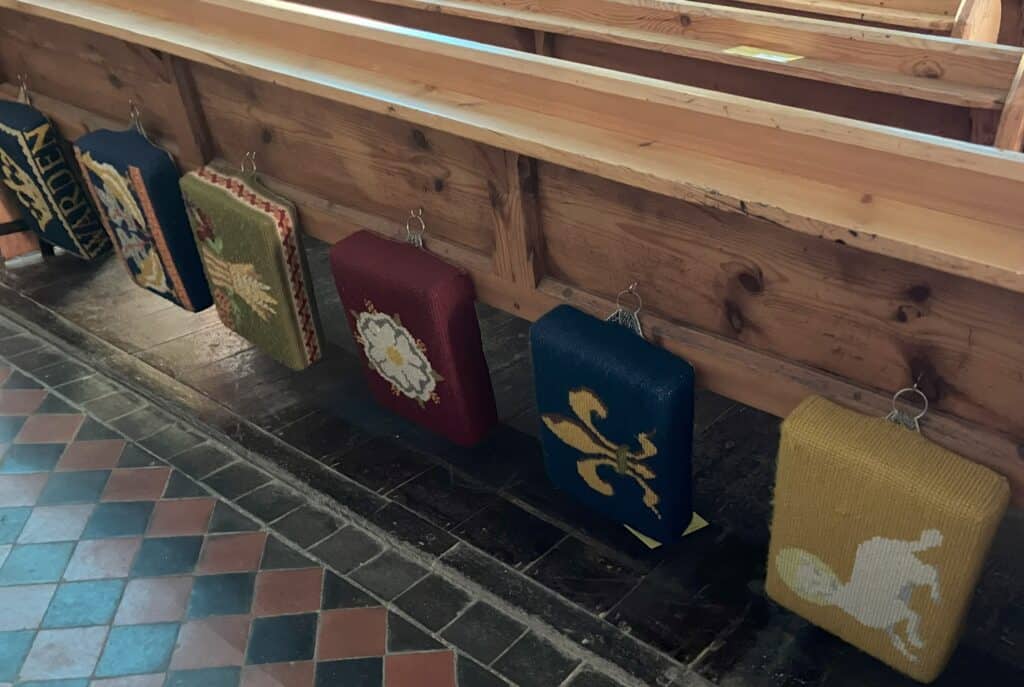
I know for a fact that this Diocese is full of beautifully made kneelers! All the kneelers used to illustrate this Blog are to be found within the Diocese; and a few churches, including St Alban’s, St Saviours already have a dedicated page on their church website
It would be great if more of our churches were featured on the Parish Kneelers website. Let’s show the world how talented embroiderers in Bedfordshire and Hertfordshire are! To find out how your church’s kneelers can be added to this national photographic archive visit Help our appeal to save Parish Kneelers by sending us images


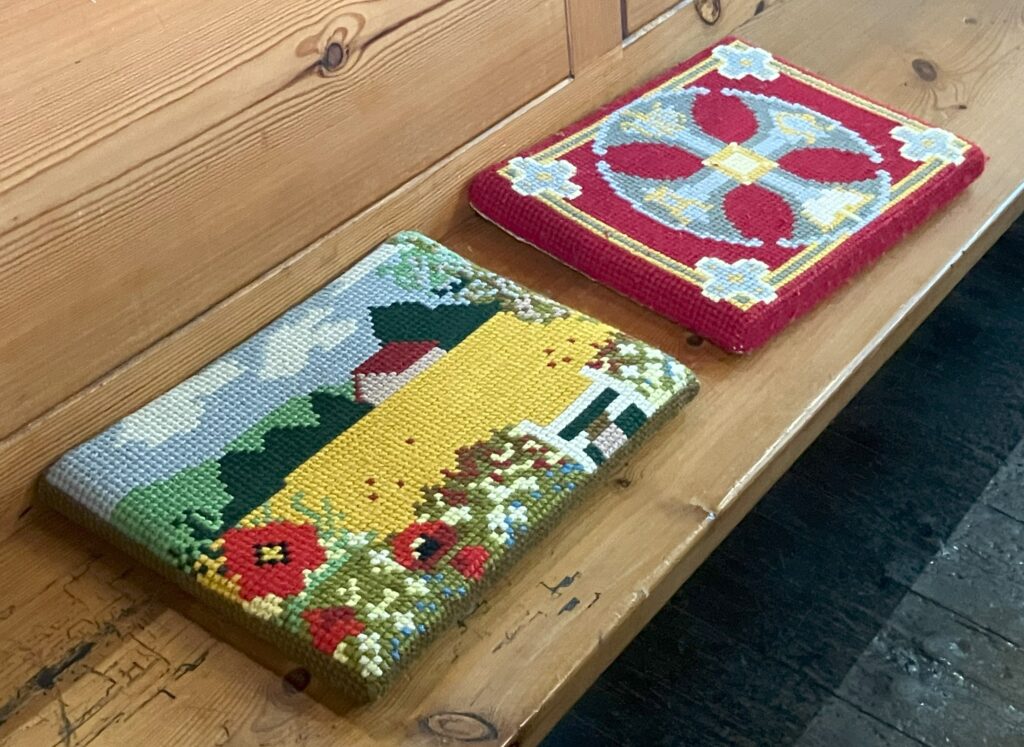
This would be a great project to get people involved in – either as a group or as a solo activity. It’s something a student studying photography might enjoy, or a creative project for your art and craft group to tackle, or maybe you have someone local who just enjoys snapping away with the camera on their phone! Do let me know if you participate.
News from the DAC team
The DAC is here to support you to care for and develop your church buildings and churchyards, and to help you through the permissions processes