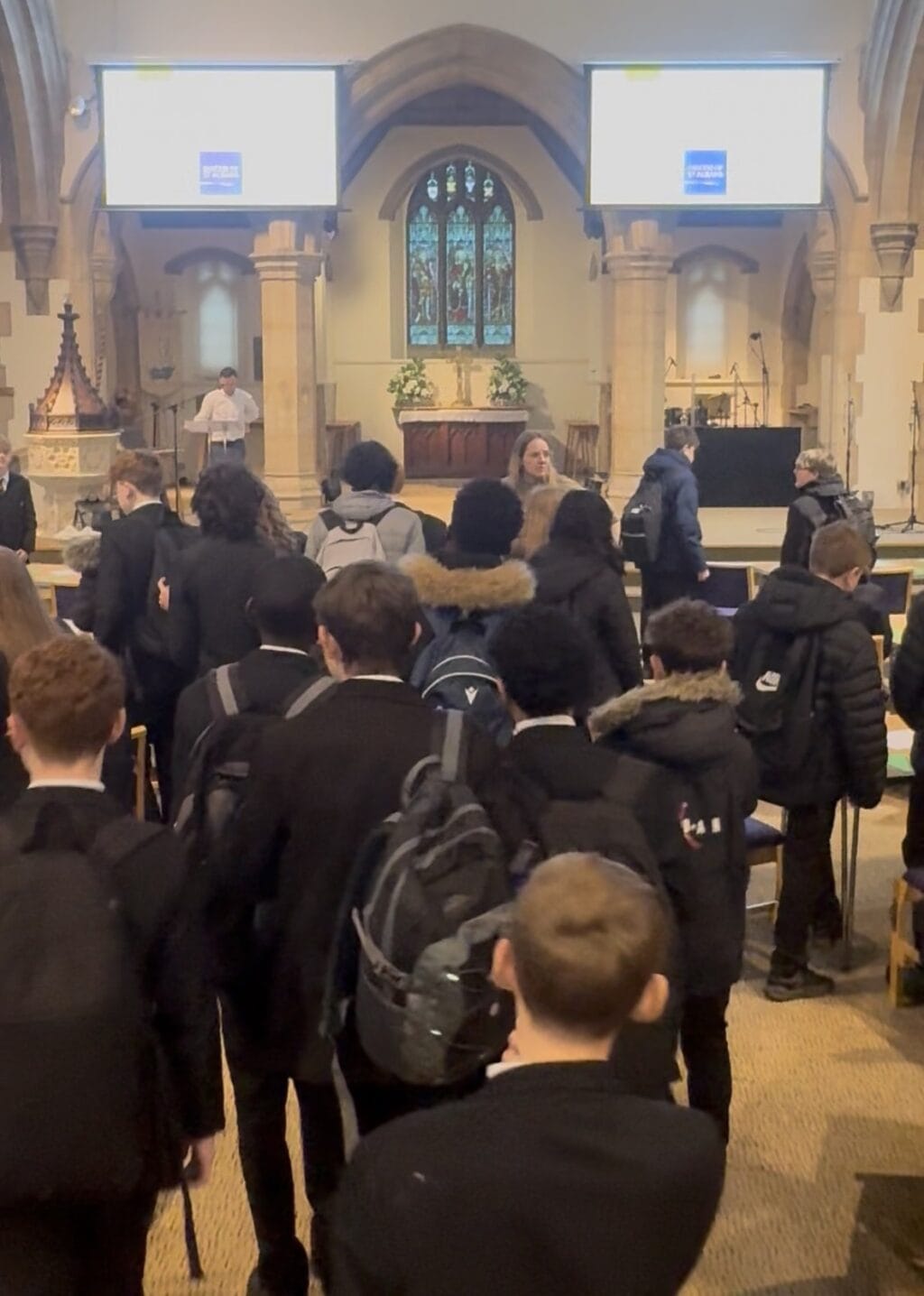
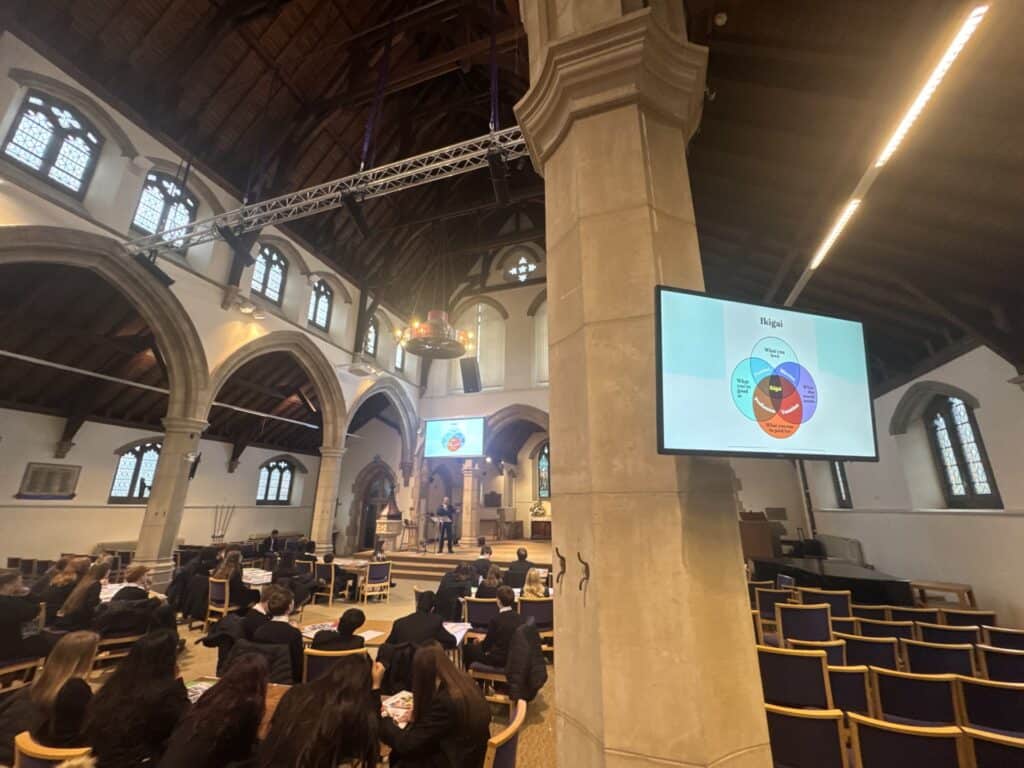
The Schools Team recently welcomed Year 8 and Year 9 students from schools across the Diocese to a thought-provoking symposium exploring how young people can flourish in today’s complex and often unsettling world.
The events, held at St Paul’s in St Albans, and Putteridge Bury near Luton, invited students to reflect on spirituality as an innate human capacity in our search for meaning, identity and purpose, and on deepening relationships with ourselves, others, the world and, for many, with God.
Three interactive workshops encouraged students to grapple with pressing questions: how to navigate polarisation and competing truth claims on social media, how to celebrate all that is good in our planet, and what characterises communities where dignity and flourishing are central.
Inspiring workshop leaders
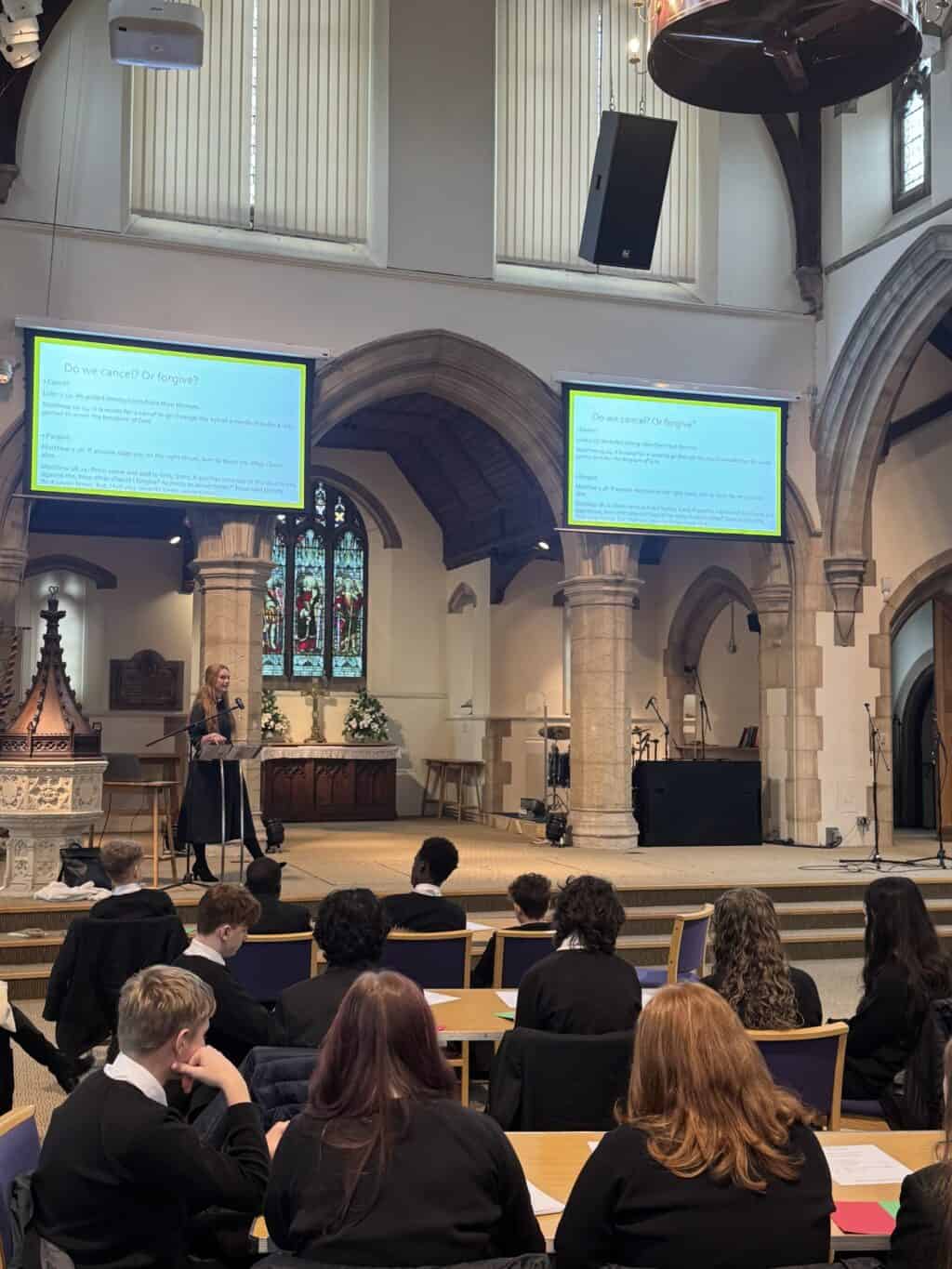
The Revd Pippa White, a young priest with a vibrant TikTok presence, spoke about how theology is not just discussed on social media but is actively happening there. With over 1 million likes and nearly 30k followers on social media and experience of national media interviews, she offered students a fresh perspective on faith in the digital age. Using examples of influencers, students discussed cancel culture and reflected on what forgiveness might look like in this space.
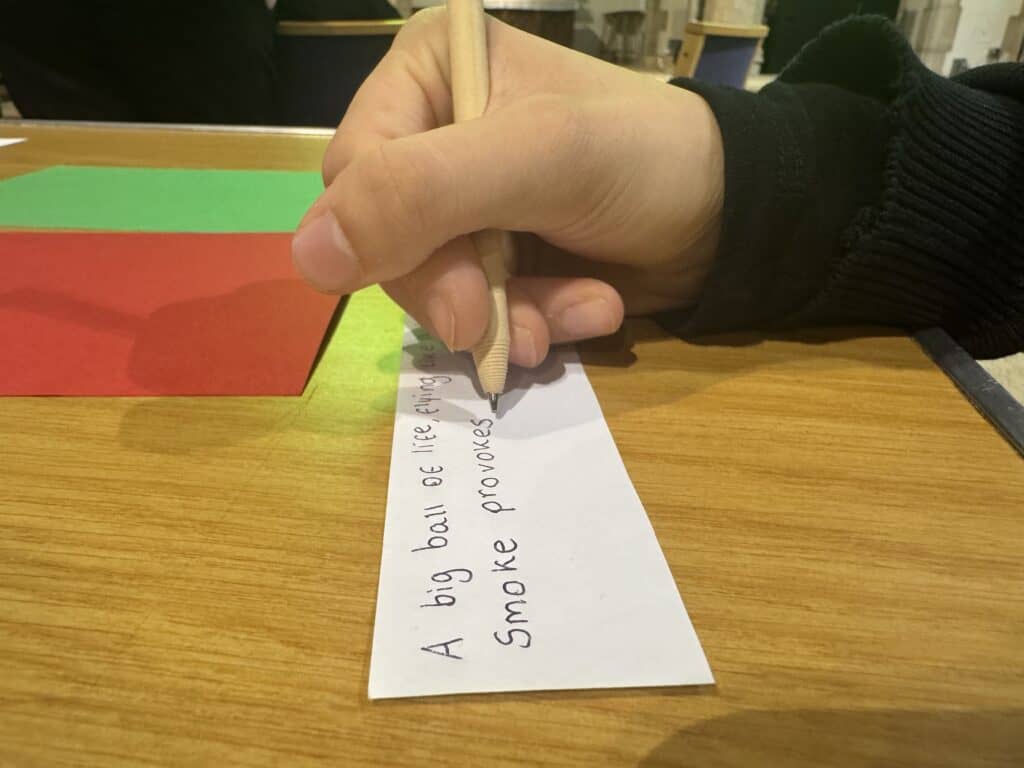
Liv Torc, an internationally-recognised poet, performer and UN consultant, brought her creative energy to the symposium. As Artistic Director of Hot Poets and the poetry stage at WOMAD, Liv challenged students to imagine artistic solutions to global challenges and gave them fun tools to create their own poetry. Sharing examples from her own life, including writing poems on bananas for her children’s lunchboxes for four years, she illustrated how to bring light and life into the everyday. Students wrote their own lines for a poem about the planet, which Liv combined into a piece performed at the end of the day, showing what is possible when we are connected.
Mike Palin, director of the youth work charity The267Project, shared his story of transformation through youth leadership. Building on his TEDx St Albans talk on “Youthwork Blue Zones”, he encouraged students to reflect on what contributes to a full life, such as community, purpose and connection. Questions such as “What does the world need?” and “What is a gap that you were created for?” helped students think about their life and purpose, and who in their lives and communities are helping them on that journey.
Insights from the day
Students from both Year 8 and Year 9 reflected on the day:
“I never thought about whether God might be online. Since he can’t really update the Bible, he can like be modern and do things on social media, so that is quite interesting.”
“It’s actually been really fun.”
“I have learnt that to live a better life you have to build a community so that everyone can be there for one another.”
“The activities we did made me think that even though we can’t see connections, they are always there.”
“I’ve learnt God is everywhere, even on the internet.”
Dr Ryan Parker, RE and Christian Ethos Adviser and lead for the symposium, said:
“The modern world in which we live can inspire awe and wonder for so many things. Likewise, there is much that stops us in our tracks – those things that make us go, ‘This is awful, I wonder why this is happening?’. This event gave students the opportunity to reflect deeply on matters of importance to them and how they might navigate life with purpose, compassion, connection, joy, curiosity and hope.”
Mrs Lucia Saggese, Ethics teacher and Associate Assistant Principal of Manshead Church of England Academy in Caddington, Bedfordshire, one of the schools taking part, said:
“One of our students said that she was really proud of herself today for coming and for having the opportunity to challenge herself. She said she doesn’t normally like to speak publicly, and the fact that she was able to do that twice today in front of all those assembled made her feel really proud.
“For us as a school this type of day is so helpful for the students’ experience of other worldviews, beliefs and insights. We had prepared for this day beforehand by talking about how the world can feel disconnected, and how religion can be a way to connect us as there is more in common than what divides.”
A vision for flourishing
The symposium highlighted the Diocese’s commitment to supporting children and young people as they navigate a rapidly changing world, particularly through education. By engaging with creativity, community and faith, students were invited to consider how they might thrive in a (dis)connected society.