Refugees and Asylum Seekers
Providing a genuine welcome and sanctuary resonates with the story of Saint Alban – Britain’s first martyr.
Alban protected the life of a Christian priest called Amphibalus, who was seeking asylum in England. The Roman soldiers beheaded Alban when he refused to turn Amphibalus over to them, and gave himself in his stead.
Alban is an exceptional example of Christian sacrifice and hospitality – and his story provides inspiration and guidance in the current refugee crisis.
Information and Local organisations
- Supporting Asylum Seekers – Guidance for clergy from the Church of England
- Toolkit for welcoming Afghan refugees – from the Church of England
- Refugee Council – for professionals seeking to offer help and support to refugees
- Syrian refugees – resources and information from the UK government
- Watford & Three Rivers Partnership – Local services for refugees. Volunteers and donations welcome
- Herts Welcomes Syrian Families – Local services for Syrian refugees
- Luton Roma Trust – helping the local Roma who have migrated to the UK to rebuild their lives in the town
Practical support – housing and fostering
- Sanctuary Foundation – promoting refugee welcome and welfare. Information on hosting, resources and training
- Citizens UK – Sponsor refugees. Campaigning to house refugees and asylum seekers – looking for houses to rent
- Positive Action in Housing – hosting a refugee in your home
- Fostering asylum seekers in Hertfordshire and Bedfordshire
Find out more and donate
- Sanctuary Foundation – promoting refugee welcome and welfare. Hosting, resources and training
- British Red Cross – helping refugees in the UK and overseas
- International Rescue Committee – helping those shattered by conflict and disaster
- Refugee Action – helping refugees create new traditions
- Unicef – helping protect children in the Ukraine
- Christian Aid – Ukraine Humanitarian appeal
- Save the Children – helping children in emergencies
- Children’s Society – working with young refugees and migrants
- USPG – funding a response in Calais
- Safe Passage – for legal routes to sanctuary
- NACCOM – the ‘no accommodation’ network of UK organisations working to end destitution amongst people seeking asylum, refugees and other migrants
- Refugees at home – matching hosts with refugees and asylum seekers
- Refugee voices – stories of some of the people Refugee Action works with
Safeguarding for refugees and asylum seekers
Refugees fleeing their country are vulnerable people. As such, it is important that people offering accommodation or wider support should be familiar with the safguarding guidance notes written specifically with Ukrainian refugees in mind.
People arriving in the UK having fled the war in Ukraine are particularly vulnerable. In pursuit of safety they have been torn from their families and communities and may have witnessed terrible things. They may have suffered bereavement, war trauma, and have arrived in a country where cultures and language are different. It is unknown how many people will arrive, or how long they will remain in the UK.
We are hugely grateful to all those who offer accommodation and other kinds of support to people fleeing the war. As responses are made to the situation that exists, it is imperative that these happen with as much regard as can possibly made to the high standards of safeguarding that our churches expect – both on the parts of those who offer accommodation and by those who will take offers up.
This guidance outlines basic measures that need to be put in place to ensure the safeguarding of everyone involved in accommodating or supporting those fleeing the war. It is a work in progress made in response to an emergency situation and will therefore likely be improved and updated.
Safety of the refugees
- People offering to accommodate or support those fleeing from the war should be endorsed as suitable to offer help by their parish’s incumbent. The incumbent should also confirm that there is no safeguarding information held against them.
- A safeguarding check of those putting themselves forward will also be made by the Diocesan Safeguarding Team, and should be made too by the Parish Safeguarding Officer to confirm that no relevant information exists about them.
- Ideally, those over 16, or some members within the family will have a clear enhanced DBS check, completed within the last 5 years from another role.
- Once there is an agreement for a family to host a refugee, basic disclosure checks should be conducted on other family members aged 16 years or over. There is no eligibility requirement for a basic check however this falls within the policy of the Church of England about when a basic check should be sought because there is a close level of trust being placed in the host by the church. This process should not delay a refugee moving in with the host family. Any blemished record will be considered by the Diocesan Safeguarding Team.
Note – checks should be carried out by the lead recruiter of the parish within which the hosting family live. There is a charge of £25 per check set by the DBS, plus £5 standard processing fee from ThirtyOne:Eight plus 50p VAT. The processing fee is split with the diocese. If the parish cannot cover this cost, please let the Diocesan Safeguarding team know so that the Diocese can reimburse the monies needed.
- As best they can, the parish safeguarding officer should put in place a reporting mechanism for safeguarding concerns that is as clear as possible. It’s appreciated that this will not be straightforward owing to inhibitors to reporting due to the reliance of living within a home, language barriers and a lack of knowledge of the country and services. This will be compounded by their current experience of trauma.
- The diocese will be endeavouring to identify Ukrainian speaking safeguarding contacts to be identified as a point of contact for reporting – possibly from the Ukrainian Culture Centre, who can pass any concern to the Diocesan Safeguarding Team, or directly to the police.
- The diocese will also be developing a Ukrainian translation safeguarding leaflet which will include how to report a safeguarding concern and to whom that should be given to guests. The leaflet will also give advice over boundaries, privacy and contact with any children of the refugee and children already living within the household.
- Adults in the host family are requested to complete Basic Awareness safeguarding training (C0).
- The diocese will keep records of all members of the hosting families, the refugees and the dates of when the hosting started and finished
- A monthly meeting should take place with the parish support group so that issues may be raised, cultural and language differences considered. Safeguarding will be raised as part of that so that there is an opportunity to disclose in a private environment. A debrief should take place when the agreement comes to an end, again in private with the support group. Any issues raised in any meeting should be shared with the diocese to help us learn and plan for further hosting.
Safety of the hosting families
- A copy of the passport for each individual housed will be held by the diocese with the consent of the refugee (or parent/carer for the child). A home cannot be offered without this.
- Any safeguarding concerns should be reported immediately to the Diocesan Safeguarding Team.
- As for guests, people offering accommodation will be offered advice over boundaries, privacy and contact with any children of the refugee and children already living within the household.
- The diocese will have good communications with Social Services and police to manage any risk arising from concerns raised against those needing accommodation elsewhere.
- The diocese will keep records of all members of the hosting families, the refugees and the dates of when the hosting started and finished.
- A monthly meeting should take place with the parish incumbent so that issues may be raised, cultural and language differences considered. Safeguarding will be raised as part of that so that there is an opportunity to disclose in a private environment. A debrief should take place when the agreement comes to an end, again in private with the parish incumbent. Any issues raised in any meeting should be shared with the diocese to help us learn and plan for further hosting.
Offers of help with the wider support
- Parish Safeguarding Officers must be involved in making careful decisions regarding individuals offering assistance in other capacities. For example, offers to drive refugees to the host family or elsewhere. Safer Recruitment should be considered in each case to ensure the safety of all.
St Albans Diocese will:
- Work in partnership with other agencies in our area who have expertise in working with vulnerable people, children and refugees, including the local authority and the police towards keeping all parties safe.
- Work towards reducing the potential safeguarding risks for both a refugee or refugee family, as well as the host family.
- Share safeguarding and child protection information appropriately and in a confidential manner.
- Liaise appropriately with statutory agencies to ensure concerns are met and support is requested.
Last updated: 14 March 2022
Safeguarding considerations for parishes offering a welcome in church to refugees
If the activity is primarily aimed at vulnerable adults and/or children:
The Church of England defines a ‘‘vulnerable adult’ as a person aged 18 or over whose ability to protect himself or herself from violence, abuse, neglect or exploitation is significantly impaired through physical or mental disability or illness, old age, emotional fragility or distress, or otherwise; and for that purpose, the reference to being impaired is to being temporarily or indefinitely impaired’.
A child is a person under the age of 18.
If the answer to this is yes, then those leading/helping should be safely recruited into the role (unless they are already safely recruited into a similar role in the church).
In this case, the recruitment must be undertaken by someone who has completed the Safer Recruitment and People Management safeguarding training module.
Part of safer recruitment includes the question of DBS eligibility.
For those working with vulnerable adults:
The worker may still be able to have an enhanced check (without a check of the barred list) if they are working weekly, or 4 or more days in a 30 day period, or overnight with those who are receiving health or social care and they are giving care, supervision, treatment, therapy, advocacy, transportation, teaching, advice, guidance and/or assistance in a group aimed at adults who need help because of their age, illness, disability or live in certain types of accommodation such as a prison, remand centre, residential care home etc.
Note – for the purposes of enhanced DBS eligibility, being a refugee does not automatically include an individual as being in the group defined as ‘adults who need help because of their age, illness, disability or live in certain types of accommodation such as a prison, remand centre, residential care home etc.’
For those working with children:
If the applicant is not in regulated activity but they supervise, teach, train, instruct and/or care for children, or provide advice/ guidance on well-being or drive a vehicle only for children on more than one occasion then they are eligible for an enhanced DBS check but without a check of the barred lists.
It is the expectation of the Charity Commission, major Christian denominations and many insurance companies that you apply for a DBS check where the applicant’s role is legally eligible for one.
Full guidance can be found on the safeguarding section of our diocesan website.
If the activity is not primarily aimed at vulnerable adults and/or children:
- Leaders/helpers need not be recruited according to the Safer Recruitment and People Management guidance, but each parish should consider appropriate safety checks as within the group of refugees, it is likely there will be some vulnerable adults or children present.
- Those working with the refugee groups should have completed safeguarding module Basic Awareness – links shown through the attached newsletter.
- Safeguarding contacts for the parish and the diocese should be displayed in the areas where the refugees are welcomed in the form of a Promoting a Safer Church poster.
- Leaders/helpers should have read S11.1 of the Parish Safeguarding Handbook – Code of Safer Working Practice.
In both cases, it’s always best to start with a risk assessment and the above are measures that can be put in place to reduce risk, however these measures are not exhaustive and careful thought should also be given to the particular environment in your church.
Useful contacts:
Children’s Services
Hertfordshire 0300 1234043
Central Bedfordshire 0300 3008142
Bedford Council 01234 267422
Luton Borough 01582 547653
Barnet 0208 3592000
Cambridgeshire 0345 045 5203
Adult Health and Social Care Services
Herts 0300 1234042
Central Beds 0300 3008303
Bedford Council 01234 276222
Barnet 0208 3595000
Luton Borough 01582 547659 ·
Cambs 0345 045 5202
Police 101 or in emergency 999
Guidance on offering a clergy home to refugees
We have set out to offer guidance that should balance the interests of clergy families and the refugee lodgers. Having a proper legal basis for the arrangement protects the interests of all parties. The Board is eager to give clergy the freedom to make the right decision for themselves and their families within an appropriate legal framework. The Housing Handbook requires you to consult with the Estates Team prior to entering into a Lodging Agreement and this guidance together with the information below gives you the details on how that will work.
Things that you should consider
Next Steps
- If you are considering offering accommodation to a refugee then you should email Iain Blythe, copying in Jez Hirst, as soon as possible. It will be helpful to know in advance which room(s) you are proposing to use, for how long, and for how many people.
- Iain will also check to see if there are restrictions on the use of the property, if the room(s) are suitable and if there are any planning or building regulation issues. This should be a quick desktop exercise.
- Once we know that the property is suitable and we have the answers to the initial questions we should be able to give you two things; the outline permission of the DBF, and; a draft Lodging Agreement with a translation.
- Once the Agreement is signed you will need to let us have a copy to finalise the Board’s approval.
Some golden rules
- The Lodging Agreement will be under a legal form called a “Licence” – this is different to a tenancy – and will usually be between you as incumbent and the refugee(s). The DBF has an interest in this but will not usually be a party to the agreement.
- The Agreement provides the refugee with a home in legal terms and offers them some protection and you will need to provide ‘reasonable notice’ to end an agreement.
- The Agreement sets out obligations on both sides, for instance relating to privacy, or provision of utilities and keeping the space clean and tidy.
- The simplest version is a furnished room, plus use of communal areas and facilities. You can also offer extra benefits like cleaning, laundry or meals if you like – but this is entirely up to you. You should include all aspects of what you provide in the agreement.
- It is advisable to notify your home insurance provider.
- If you or members of your household claim benefits you may need to check that these are not impacted.
- It is important that the proposed lodging is fit for purpose.
- Since 2016, the law has required everyone renting out property in England to check whether those they provide housing are legally allowed to live in the UK – regardless of the type of agreement.
If you have a question about a vacant vicarage, please contact Iain Blythe in the first instance. Details of the government scheme are due to be released soon, which appears to be linked to an increase in local authority funding which points to authorities in the area having an important role to play. As soon as we have further information we will update this advice.
Ukraine
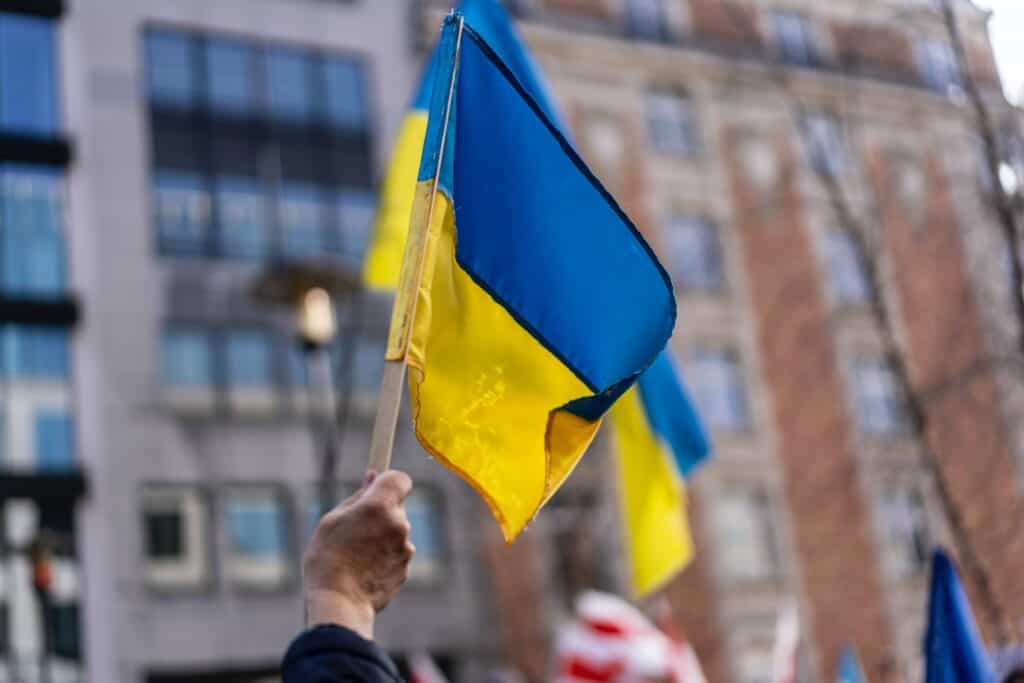
Supporting Ukrainian refugees – offers of accommodation, financial and other support in the diocese. Safeguarding information
Church of EnglandAlmighty and merciful God,
whose Son became a refugee and had no place to call his own;
look with mercy on those who today are fleeing from danger,
homeless and hungry.
Bless those who work to bring them relief;
inspire generosity and compassion in all our hearts;
and guide the nations of the world towards that day when all will rejoice in your Kingdom of justice and of peace;
through Jesus Christ our Lord.
Amen